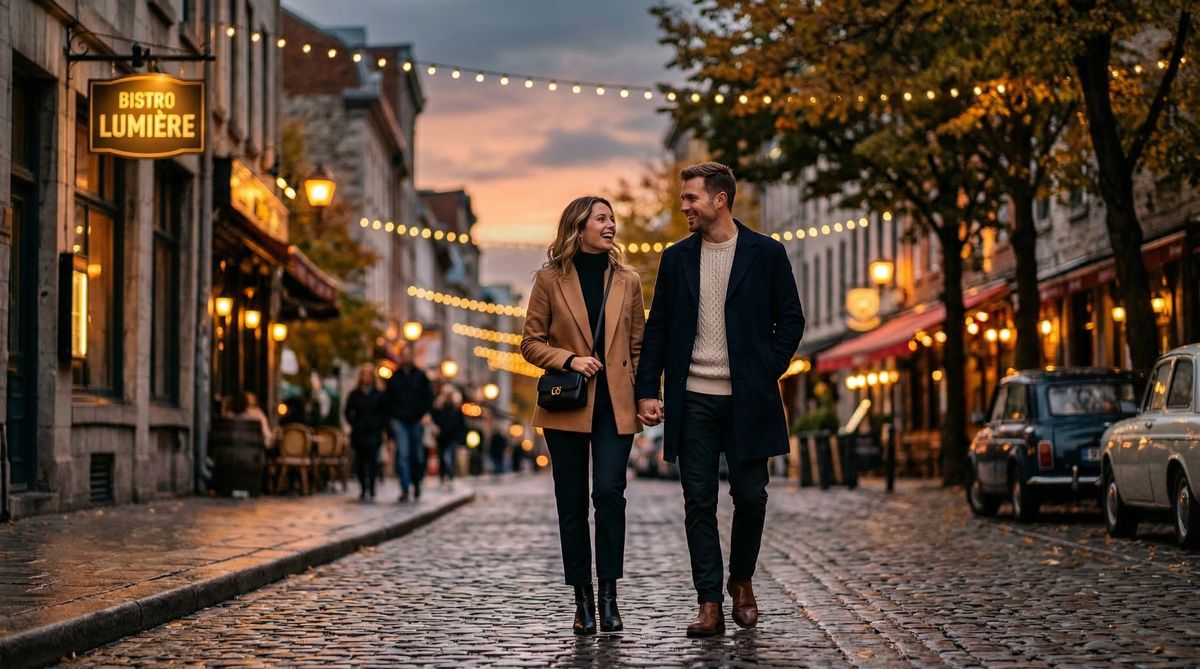
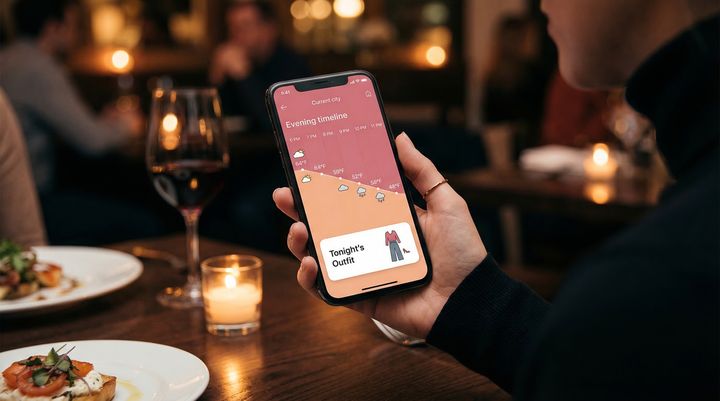
You've been looking forward to this evening all week. The reservation is booked, you've narrowed it down to two outfit options, and then you check the weather. It says 62°F and partly cloudy at 7 PM — but there's a 40% chance of rain by 9 PM and the temperature is expected to drop to 48°F by the time you're heading home. Suddenly, neither outfit feels right.
Date nights are where weather-based dressing gets personal. You're not just trying to stay comfortable — you're trying to look great, feel confident, and not end up shivering outside a restaurant waiting for your ride. The stakes are higher than a Tuesday commute, and the weather rarely cooperates with your plans.
Why Evening Weather Is Harder to Dress For
Daytime dressing is relatively simple because the temperature generally moves in one direction: up. You can shed a layer as it warms. But evening plans flip that script entirely. You're heading out right as the sun sets, which means temperatures are actively falling the entire time you're out. A 15-degree drop over the course of dinner is completely normal in spring and fall, and in certain climates, even summer evenings can get surprisingly cool once the sun disappears.
Then there's the variability of date night itself. You might walk from the car to a warm restaurant, then step outside for a stroll, then sit at an outdoor bar, then walk back. Each of those moments has a different comfort requirement, and you're navigating all of them in a single outfit. This is where most people either overdress and sweat through appetizers, or underdress and spend the whole walk home regretting their choices.
Did you know? Evening temperatures in cities like Chicago, San Francisco, and Denver can drop 20°F or more between 6 PM and 11 PM during spring and fall months. That's the difference between a light blouse and needing a proper coat.
The Golden Rule: Dress for 10 PM, Style for 7 PM
The most reliable strategy for date night dressing is deceptively simple: build your outfit around the coldest temperature you'll experience, then add style elements that work in the warmer early hours. This layering approach means your foundation layer should be warm enough for the walk home, while your visible layers look polished for the restaurant.
In practice, this often means choosing a great jacket or coat as the centerpiece of your look rather than an afterthought. A well-fitted blazer, a tailored trench, or a sleek leather jacket does double duty — it elevates the outfit at dinner and keeps you warm when temperatures drop. Treat outerwear as part of the outfit, not something you hide under the table.
The best date night outfit isn't the one that looks best in your mirror at home — it's the one that still feels right three hours later, under different conditions, in a completely different setting.
Building Your Date Night Framework
Rather than planning outfit-by-outfit for every scenario, smart dressers build a framework they can adapt. Think of it as a formula with interchangeable parts. Your base layer handles comfort and temperature regulation. Your mid layer adds warmth if needed. Your outer layer ties the look together and protects against wind and rain. Your accessories handle the details — a scarf for extra warmth, a bag that fits an umbrella, shoes that look great but can handle a wet sidewalk.
The key insight is that each component should be independently removable. If the restaurant is warm, you take off the mid layer and the outfit still works. If it starts raining during your post-dinner walk, the outer layer handles it without making you look like you're heading to a hiking trail. Flexibility is what separates a good date night outfit from one that only works in one scenario.
Scenario Planning: What to Wear When
Let's walk through the most common date night weather scenarios and exactly how to handle each one. These aren't hypotheticals — they're the situations Dresr users encounter every week.
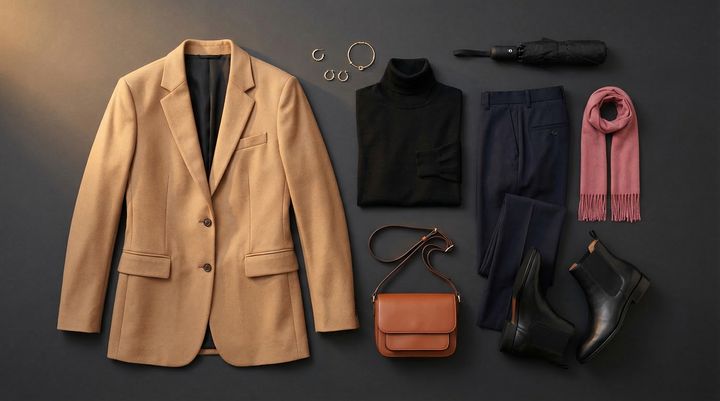
The classic cool evening (55-65°F, clear): This is the sweet spot. A fitted knit or cashmere sweater with tailored trousers or a midi skirt works beautifully. Add a structured jacket — a wool blazer or cropped trench — that you'll actually want to wear, not just carry. Closed-toe shoes keep your feet warm during the walk without sacrificing style. This is the scenario where most of your wardrobe already has the right pieces; you just need to reach for them intentionally.
The temperature drop (starts at 68°F, drops to 50°F): This one catches people off guard. You leave the house feeling great in a light layer, and by dessert you're dreading the walk to the car. The fix is a packable layer — a thin down vest, a merino wrap, or even a large scarf that can double as a shawl. Something you can stuff in a bag during dinner and pull out when the temperature nosedives. The trick is choosing a layer that's warm without being bulky, so it doesn't ruin the silhouette of your outfit.
The rain threat (40-60% chance, timing unclear): Rain probability during evening hours is notoriously unreliable. The solution isn't to dress like a storm chaser — it's to make small, strategic adjustments. Swap suede shoes for leather ones. Choose a jacket with a collar you can pop. Bring a compact umbrella that fits in your date-night bag. Skip the silk top that will show every water spot. These tiny swaps don't change the look of your outfit, but they completely change how you feel if it does start raining.
The humid summer night (78°F+, muggy): Hot and humid evenings are their own challenge. Heavy fabrics cling, makeup melts, and anything structured feels suffocating. The move here is breathable natural fabrics — linen, cotton, or lightweight modal — in relaxed but intentional silhouettes. A linen blazer still reads as put-together but won't turn into a sauna. Skip the layering entirely and invest the effort in accessories instead: a great watch, interesting earrings, or standout shoes do the heavy lifting when your clothing needs to be as minimal as possible.
The cold winter date (below 40°F): Winter date nights are paradoxically the easiest to dress for, because nobody expects you to look breezy. Lean into it. A great coat is the outfit — everything underneath is supporting cast. Invest in one really good winter coat that makes you feel incredible, and suddenly every cold-weather date becomes an opportunity to wear it. Underneath, thermal base layers are invisible and life-changing. Nobody will know you're wearing a merino undershirt, but you'll feel the difference for hours.
The Details That Make the Difference
Beyond the clothing itself, a few small choices dramatically improve your date night experience in unpredictable weather. Shoes are the most important detail to get right. Wet, cold, or blistered feet will ruin your evening faster than any wrong top. If there's any chance of rain, choose shoes with a real sole — not ballet flats or canvas sneakers that soak through immediately. A leather boot, a solid loafer, or a well-made sneaker handles wet sidewalks while still looking intentional.
Your bag matters too. On a regular day, you might not think twice about your bag choice. But on a date night with uncertain weather, having room for a compact umbrella, a thin layer you might shed, and your phone and wallet is genuinely practical. A bag that's too small forces you to carry extra layers in your hands, which is the opposite of the effortless look you're going for.
The bottom line: Great date night style isn't about looking perfect in one controlled moment — it's about looking and feeling great across an entire evening of changing conditions. Check the hourly forecast, dress in smart layers, and make your outerwear part of the outfit. Your future self, standing outside at 10 PM, will thank you.