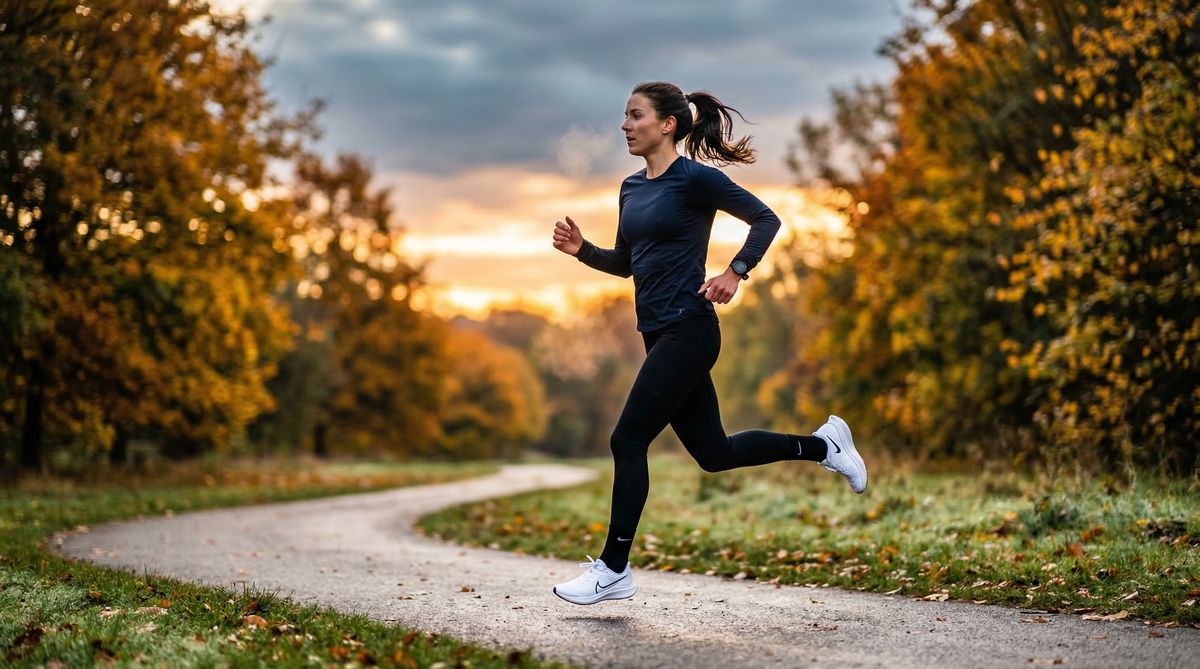
Your alarm goes off at 6 AM. You're motivated, your shoes are by the door, and you're ready to crush that morning run. Then you open the weather app: 47°F, 70% humidity, wind gusts at 15 mph, and a 30% chance of rain by 7:30 AM. Do you wear shorts or leggings? A windbreaker or just a long sleeve? Do you bring a hat? And suddenly, the five minutes you spend deciding what to wear eats into the time you actually had to work out. Planning around the full forecast takes the guesswork out of the equation.
Outdoor fitness has a clothing problem. Unlike the gym — where the temperature is always 72°F and the only weather event is someone turning on a fan — exercising outside means your clothing choice directly affects your performance, comfort, and sometimes your safety. Get it wrong and you're either overheating two miles into a run or shivering through your cool-down.
Why Workout Clothing Decisions Are Different
Getting dressed for a workout isn't the same as getting dressed for the office. When you're sitting at a desk, a slightly-too-warm sweater is a minor annoyance. When you're running, cycling, or doing a park workout, that same overheating can tank your performance and make you miserable. Your body generates significant heat during exercise — roughly 10 to 20 times more than at rest — so the key principle of workout dressing is to dress for 15 to 20 degrees warmer than the actual temperature.
This is where most people go wrong. They step outside, feel cold, and pile on layers designed for standing still. Ten minutes into their workout, they're peeling off a jacket and tying it around their waist, which is exactly the kind of friction that makes people skip outdoor workouts entirely.
The 15-degree rule: When dressing for exercise, add 15-20°F to the actual temperature. That's how warm you'll feel once your body heats up. So if it's 45°F outside, dress as if it's 60-65°F — usually a long-sleeve shirt and light tights are plenty.
The Temperature Zones
After years of running, cycling, and outdoor training in every condition imaginable, experienced athletes tend to break weather into zones. Here's the framework that works for most people and most activities.
Below 30°F — the cold zone. This is where the stakes are highest. Exposed skin can get frostbitten in strong wind, and cold muscles are injury-prone. You need three layers: a moisture-wicking base layer against your skin, an insulating mid-layer like a fleece or merino wool zip, and a windproof outer shell. Cover your extremities — a thermal hat, gloves, and a neck gaiter make a massive difference. Your legs generate more heat than you think, so one pair of thermal tights usually suffices without a second layer.
30-45°F — the tricky zone. This is the range that causes the most clothing mistakes because it feels cold when you step outside but warms up fast once you're moving. A long-sleeve moisture-wicking shirt with a light vest or thin windbreaker is the sweet spot. Gloves are optional but a headband covering your ears is usually worth it. The mistake here is wearing a heavy jacket — you'll overheat within ten minutes.
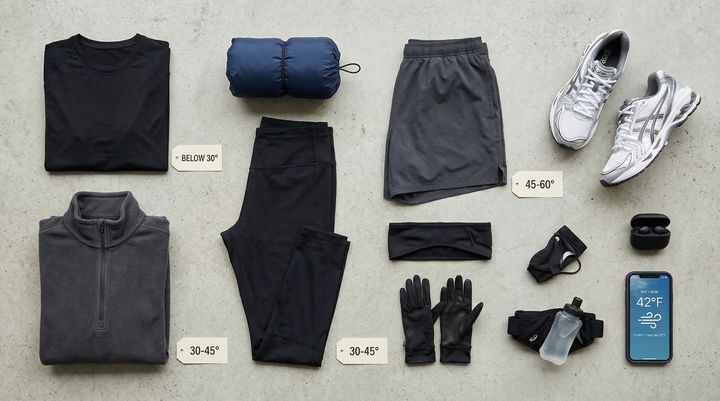
45-60°F — the sweet spot. This is the range most runners and cyclists consider ideal. A long-sleeve tech shirt or a short-sleeve shirt with arm sleeves gives you the flexibility to adjust on the go. Light tights or shorts with knee-length socks work for the lower body. You generally don't need any outerwear unless wind is a factor.
60-75°F — the warm zone. Shorts and a light tech tee are all you need. The focus shifts from staying warm to staying cool and managing sweat. Light colors reflect more heat than dark ones. A moisture-wicking hat or visor keeps sun out of your eyes and sweat off your face. Hydration becomes more important than clothing choices in this range.
Above 75°F — the heat zone. Wear as little as comfortable. Loose, light-colored, moisture-wicking fabrics are essential. Avoid cotton entirely — it absorbs sweat and becomes heavy and chafing. Consider a mesh tank or a split-back singlet that maximizes airflow. Sunscreen is non-negotiable. Plan your workout for early morning or late evening when temperatures are lower and UV exposure is reduced.
The Wild Cards: Rain, Wind, and Humidity
Temperature is the foundation of your outfit choice, but the wild cards change the equation entirely. A 55°F run in still air and sunshine feels completely different from a 55°F run in 20 mph wind with drizzle. Here's how to adjust.
Wind is the most underestimated factor. Wind chill can make 50°F feel like 38°F on exposed skin, and headwinds dramatically increase your energy expenditure. If wind speeds are above 15 mph, add a thin windproof layer — even a packable shell that weighs almost nothing makes an enormous difference. Plan your route so the wind is at your back on the way home, when you're tired and sweaty and most vulnerable to the chill.
Rain requires a mental shift. Most people's instinct is to grab a waterproof jacket, but fully waterproof fabrics trap heat and sweat inside, turning you into a human sauna. For light rain, just get wet — a moisture-wicking synthetic shirt dries quickly and won't weigh you down. For heavy or sustained rain, a water-resistant (not waterproof) shell with ventilation is the move. Protect your phone, not your body. And always switch to trail shoes or shoes with better grip — wet pavement is surprisingly slippery mid-stride.
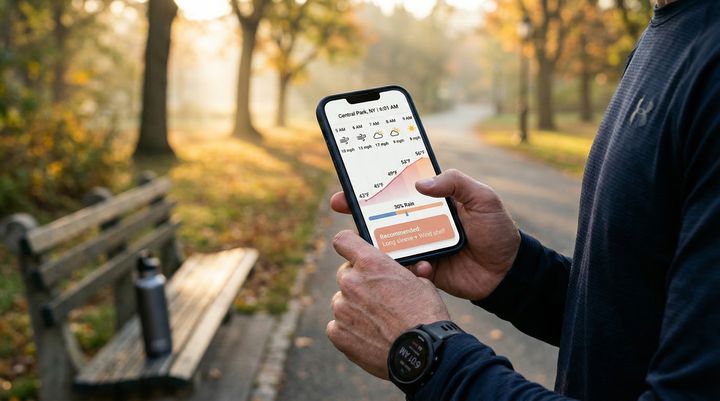
Humidity is the silent performance killer. When humidity is high, your sweat can't evaporate efficiently, which is your body's primary cooling mechanism. A 70°F run at 90% humidity feels brutally harder than the same run at 30% humidity. On humid days, choose the most breathable fabrics you own, slow your pace by 10-15%, and hydrate more aggressively. There's no clothing hack that beats humidity — you just have to respect it and adjust your effort.
The Gym Commute Problem
Here's a scenario Dresr users deal with constantly: you're walking or biking to the gym in 40°F weather, working out inside for an hour, then heading home in 35°F weather while damp with sweat. The sandwich strategy handles this perfectly: wear your workout clothes as the base, add a packable layer for the commute, and put it back on for the trip home.
A lightweight down jacket or a fleece pullover that compresses into a small pouch works perfectly for this strategy. The key is that your commute layer should be separate from your workout — don't wear your warm commute jacket to train in and expect it to keep you warm on the way home when it's damp.
The worst workout outfit isn't one that's too cold or too warm — it's the one that makes you skip the workout entirely. When in doubt, dress lighter. You can always pick up the pace to warm up, but you can't cool down without stopping.
Building Your Outdoor Workout Wardrobe
You don't need a closet full of specialized gear. Most outdoor athletes can cover every condition with a surprisingly small set of versatile pieces. A good moisture-wicking base layer in both short and long sleeve handles 80% of your workouts. Add a thin fleece or half-zip for cold days, a packable wind shell for breezy or drizzly conditions, and a pair each of shorts and full tights. That's eight pieces total that cover you from 25°F to 90°F.
The real investment should be in fabric quality, not quantity. A single well-made merino wool base layer will outperform three cheap cotton shirts in every weather condition. Merino regulates temperature, resists odor, and manages moisture better than any synthetic. It's more expensive upfront but lasts longer and works harder per wear than anything else in your drawer.
The bottom line: Outdoor workouts don't get canceled by weather — they get canceled by the wrong clothing. Know the temperature zones, respect the wild cards, and dress lighter than your instincts tell you. Your body will thank you five minutes into the run.